
Welcome back to Sunday Story friends, and this week we’re bringing you a fascinating story that illustrates one of the core principles we hold here at Authentik: That the forces of disruption and the forces of transformation are the same fundamental forces - what matters is how you respond to those forces, because these stories have lessons that can helps us today.
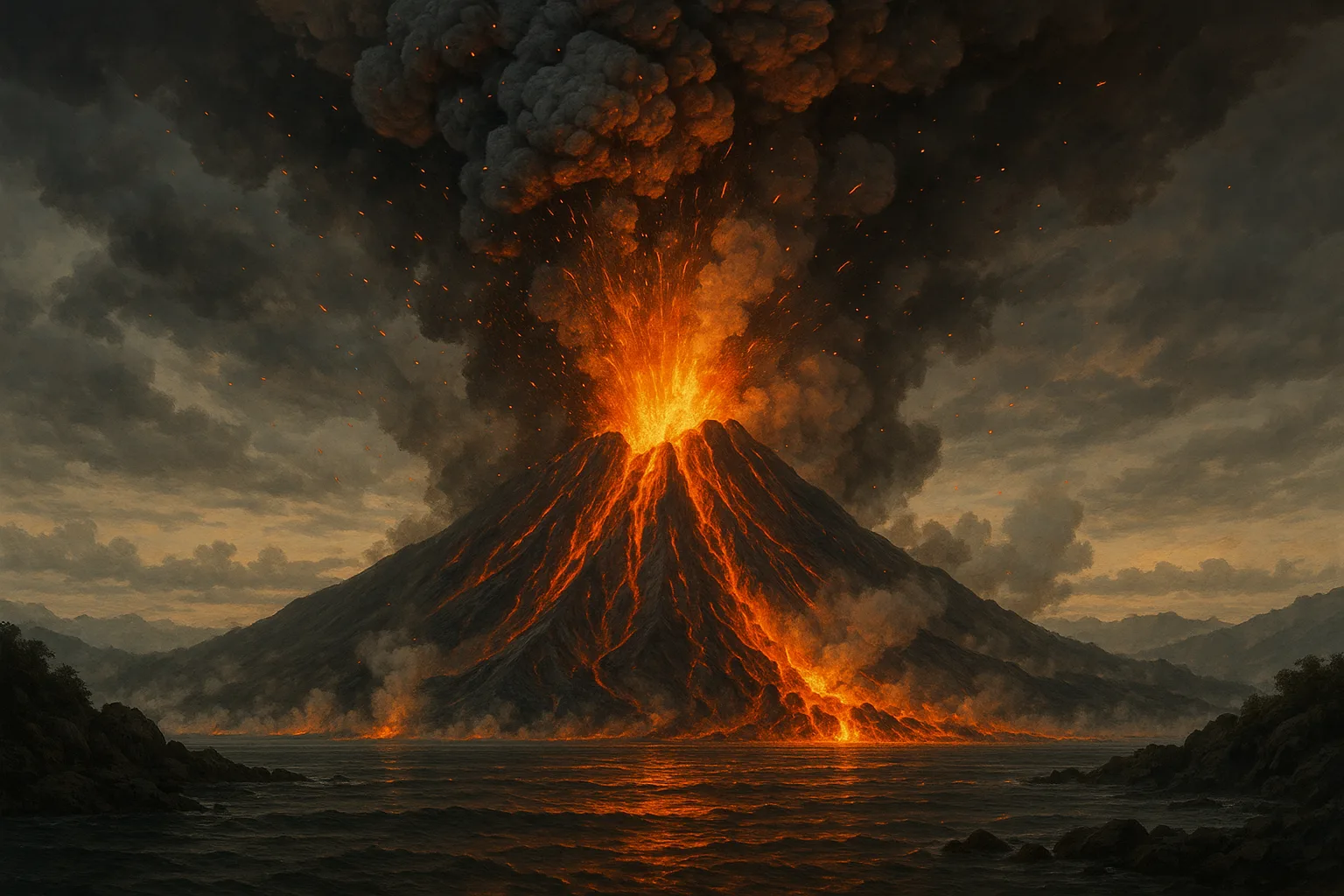
In this Sunday Story we’re going to tell you about a catastrophe that could well happen again anytime. Volcanic eruptions are not unheard of on earth - if you look at the historical record, big eruptions are some of the most powerful chapters of the human story. The Toba event allegedly produced an evolutionary bottleneck that nearly wiped-out mankind about 70,000 years ago. The Krakatoa explosion in 1883 triggered tsunamis that were over 40 meters high, and it was so loud that people thousands of kilometres away heard it. In 2010, an Icelandic volcano erupted and shut down air travel for much of Europe for an extended period of time - talk about disruptions; all three of these examples were violent, extreme, and showed the power of the earth. And, we’re aware of even bigger blasts that are geologically bound to happen eventually - we don’t know when, and don’t change your weekend plans or anything, but the Yellowstone Supervolcano is often regarded as one of the primary extinction level risks that we face, and so we know that this type of disruptive force not only exists, but it impacts humanity significantly and with regularity.
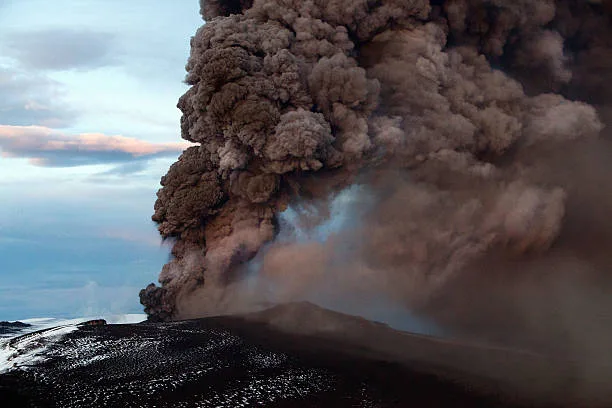
Today, I’m going to tell you about a volcanic eruption that occurred in 1815 in Indonesia. The volcano - called Mount Tambora - erupted violently. The 4.3 kilometre tall mountain instantly became only 2.8 km tall, so massive was the release of energy. People in Sumatra, over 2000 km away thought there must have been a nearby naval battle occurring as the sound of the cannons was clear. Tens of thousands of people died instantly. In the days that followed scattered reports from sailors arrived in places like Java, and the English-speaking world would eventually hear about Tambora from reports of people like Sir Stamford Raffles, the British official in Java at the time. The stories told of skies that were black for days, rocks falling, seas boiling, and ash falling like snow - even hundreds of kilometres away from the explosion. The rest of the world would find out in the coming months, as news travelled slowly in the early 19th century. The ash cloud ended up rising over 40 km into the stratosphere, eventually encircling the earth, and had significant consequences to people all over the world.
First and foremost, this eruption produced massive climate shifts worldwide. In Europe, they experienced the “Year without Summer”, with crop failures, overcast skies, and nonstop rain. Famine was widespread, and food prices rose dramatically. The end result - tens of thousands dead across Europe, riots in major cities, and more - was significantly disruptive.
Think of yourself in that situation - your entire world has just been upended by something totally outside of your control. Scarcity means people literally cannot afford food to eat. It doesn’t get much more disruptive than that, does it? So what do you do about it?
Obviously, the specifics of what you do depend on your context, but what is common is that for disruption to become transformation, people must act with intention to make it so. In other words, we gotta do something.
That’s what a group of writers did in Geneva in the “year without summer”. The miserable weather - cloud cover, constant rain - meant that this group of writers was very much stuck inside most of the summer, so they chose to pass the time by engaging in writing challenges that would help them become better writers. One of these people was Mary Shelley, and it was in this summer that she wrote Frankenstein. This is not just a classic piece of literature; once it was revealed that a woman had written it, it contributed greatly to the cultural shift towards women’s rights that followed (albeit slowly) in the ensuing decades.
On the other side of the Atlantic, crop failures hit New England particularly hard. The people living there were experiencing food shortages and skyrocketing prices, and so they did what their recent ancestors from Europe had done just a few generations before: they decided to move West in search of better opportunities. Those are the people that resulted in the settlement of America’s “Midwest” and the eventual Westward expansion of America that gave us Hollywood, Starbucks, and Microsoft.
Perhaps most significantly and directly related to Tambora: The crop failures resulted in the deaths of horses worldwide; this was nearly 100 years before Henry Ford’s Model T became a household fixture, and reliance on animal labour was still the common paradigm for the world. With this massive disruption of transportation and work systems, inventors were inspired to find solutions. One such inventor was named Karl Drais, and he invented a metal frame attached to two wheels that a rider could propel themselves on. This invention changed the world - we call it the “bicycle” today.
This story isn’t just a fun historical anecdote, though you may read it that way if you wish. This Sunday Story is actually a call to action.
The disruptive force of Tambora was significant and global. It had cascading effects through multiple industries, and had a real world impact on peoples lives and livelihoods. Its effect on humanity was far-reaching, significant, and unpredictable - and it was really, really hard for the average everyday person to live through.
Go back and re-read that paragraph, but replace “Tambora” with “Artificial Intelligence”, “the rise of fascism in western democracies”, “the technological and social implications of UAP”, or any number of other disruptors that we write about on a regular basis, and you’ll find that the statement doesn’t just describe the context of 1816 - it describes the context of 2025 just fine too. And like 1815, in the face of immense disruption, some people decided to say “Hey, let’s do this instead!”.
Some people decided to step up and be leaders.
Today, those people exist too. Instead of Mary Shelley, we’ve got people like Ky Dickens and Dr. Diane Hennesy Powell doing incredibly brave and interesting work that challenges us to rethink the capacity and competency of human beings in “The Telepathy Tapes”. You can replace Karl Drais with folks like Dr. Anna Brady Estevez who is bringing together scientists and entrepreneurs under the banner of NASA and the National Science Foundation to support research into new technology, including tech related to UAP. And instead of farmers in New England going west, we’ve got some of the worlds best and brightest working on making artificial intelligence - and the social and economic benefits that come with marrying AI and robotics in an ethical way (sometimes....) - to create a better future for our species.
The leadership I’m describing above - Shelly writing a book or Drais inventing the bicycle or their modern equivalents - also highlights a critical attitude that leaders in the modern disruptive era simply must have: A commitment to benefit others over self.
It’s not about improving your own situation - it’s about improving everyone’s situation. The rising tide lifts all boats, so that means you too - but if you focus on your boat, you won’t succeed as a leader.
Service to others over self. It’s essential.
If enough of us - you included - are willing to stand up in your space and do your own version of “write a book”, “invent a bicycle”, or “move west” for the benefit of those around you, then do it. We need that more than ever these days. And if you do it for others, not just yourself, you will be successful. We all will. Because as Ben Lee said in his hit song - “We’re all in this together”.
We need leaders like you to help us get through “this” to whatever is on the other side, and Authentik is here to help.
Thanks for reading. We’ll see you next Sunday.